
Best Indoor Flowering Plants: Blooming Houseplants for Every Home
Bring color and life to your indoor spaces with these beautiful flowering houseplants. From low-light tolerant options to sun-loving bloomers, there's a perfect plant for every room.
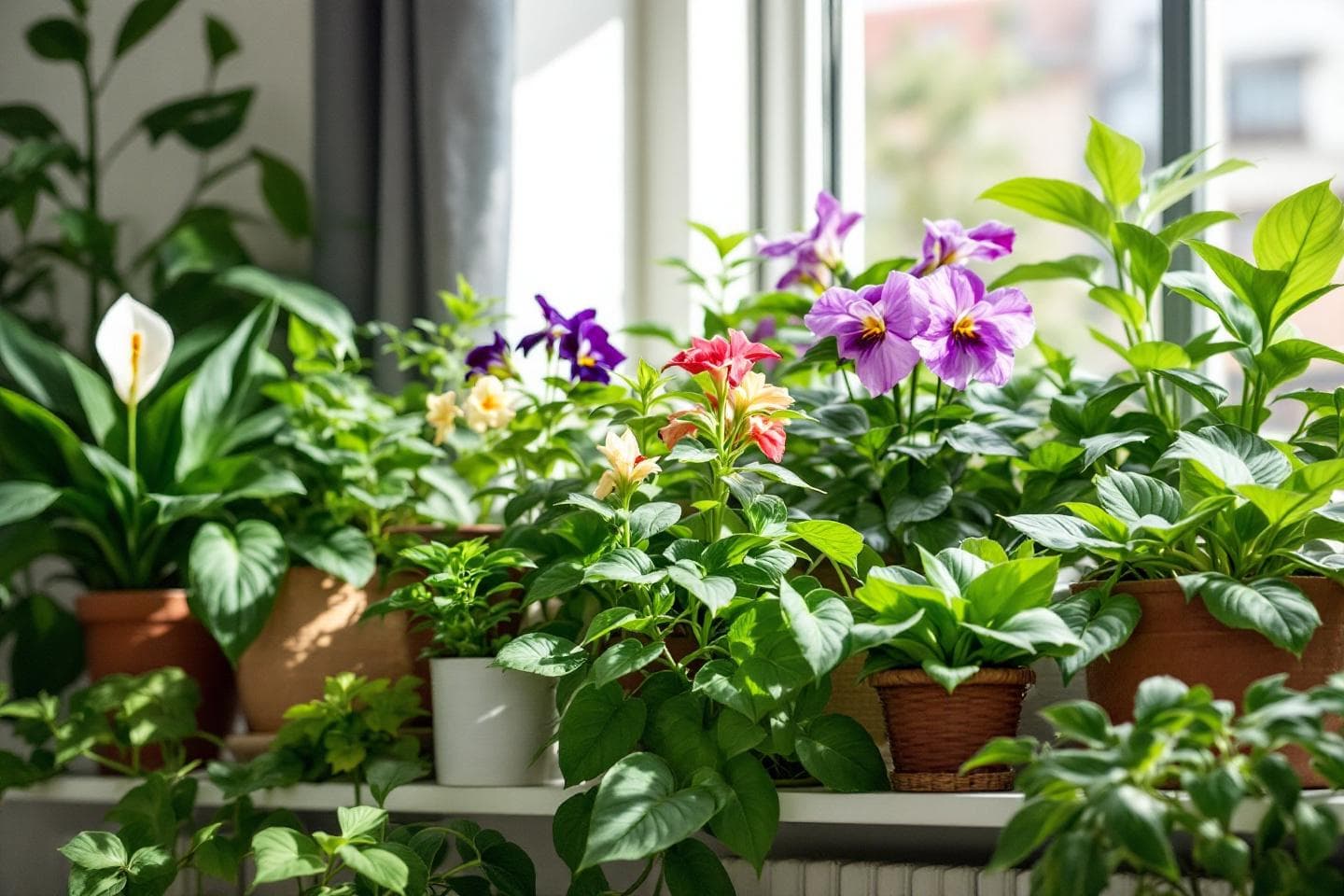
While foliage plants are lovely, there's nothing quite like the joy of indoor flowers blooming in your home. The right flowering houseplants can provide months of colorful blooms, purify your air, and boost your mood. Here are the best indoor flowering plants for every light condition and skill level.
Low-Light Flowering Plants
Perfect for north-facing windows, bathrooms, or rooms with limited natural light:
Peace Lily
Elegant white spathes that bloom multiple times per year
- Light: Low to medium indirect
- Water: When top inch is dry
- Blooms: Spring-summer (can rebloom)
- Bonus: Excellent air purifier
African Violet
Compact plants with velvety leaves and continuous blooms
- Light: Low to medium indirect
- Water: From bottom; keep soil moist
- Blooms: Year-round with proper care
- Colors: Purple, pink, white, blue
Anthurium
Heart-shaped blooms in vibrant reds, pinks, and whites
- Light: Low to bright indirect
- Water: When top 2 inches dry
- Blooms: Nearly year-round
- Tip: Higher humidity helps
Lipstick Plant
Trailing vine with tubular red flowers
- Light: Medium indirect
- Water: Keep evenly moist
- Blooms: Spring-summer
- Style: Great in hanging baskets
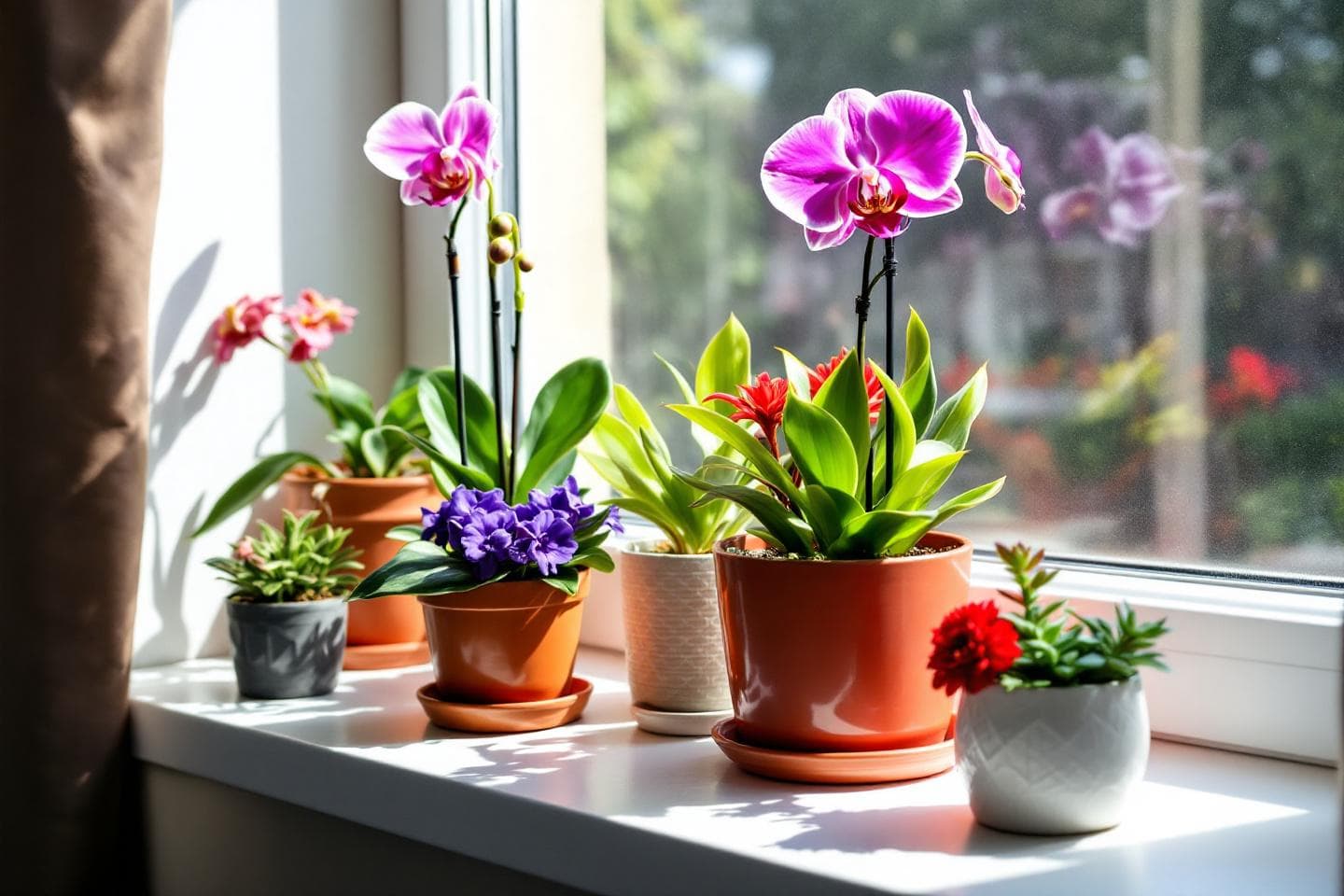
Bright Light Flowering Plants
For south or west-facing windows with several hours of direct or bright indirect light:
Phalaenopsis Orchid
The most popular orchid for beginners with long-lasting blooms
- Light: Bright indirect (no direct sun)
- Water: Weekly; let roots dry between
- Blooms: 2-3 months; reblooms yearly
- Colors: White, pink, purple, spotted
Hibiscus
Tropical blooms in stunning colors; can grow large
- Light: Direct sun 4-6 hours
- Water: Keep consistently moist
- Blooms: Spring through fall
- Note: Needs pruning to stay compact
Geraniums
Classic flowering plants with cheerful cluster blooms
- Light: Direct sun 4-6 hours
- Water: Let top inch dry
- Blooms: Spring through fall
- Tip: Deadhead for continuous blooms
Kalanchoe
Succulent with clusters of small, bright flowers
- Light: Bright indirect to direct
- Water: Drought tolerant; let dry
- Blooms: 8+ weeks; can rebloom
- Colors: Red, pink, orange, yellow
Easy-Care Flowering Plants for Beginners
| Plant | Light | Watering | Difficulty |
|---|---|---|---|
| Peace Lily | Low-Medium | Weekly | Very Easy |
| Pothos (Flowering) | Low-Bright | When dry | Very Easy |
| Kalanchoe | Bright | Every 2 weeks | Easy |
| Christmas Cactus | Medium-Bright | When top dry | Easy |
| Begonia | Medium | Moderate | Moderate |
Seasonal Bloomers
These plants bloom at specific times of year, adding seasonal color to your home:
Winter Bloomers
- Christmas Cactus - Blooms Nov-Jan
- Poinsettia - Holiday classic
- Amaryllis - Dramatic trumpet blooms
- Cyclamen - Cool-weather lover
Spring/Summer Bloomers
- Gardenia - Fragrant white blooms
- Hydrangea - Big, showy clusters
- Jasmine - Intensely fragrant
- Mandevilla - Tropical trumpet flowers
Tips for Getting Indoor Plants to Bloom
Provide Adequate Light
Most flowering plants need more light than foliage plants. Move closer to windows or supplement with grow lights.
Use Bloom-Boosting Fertilizer
Look for fertilizers higher in phosphorus (the middle number) during blooming season. Apply monthly.
Maintain Proper Temperature
Many plants need cooler nights (10-15 degrees F difference) to trigger blooming. Some need a cold period.
Don't Overwater
Overwatering is the #1 killer of houseplants. Most prefer to dry slightly between waterings. Check soil before watering.
Increase Humidity
Many flowering plants are tropical and appreciate 50-60% humidity. Use pebble trays or humidifiers.
Frequently Asked Questions
Why won't my indoor plant flower?
The most common reasons are insufficient light, lack of fertilizer, wrong temperature, or the plant is too young. Most flowering plants need brighter light than you'd expect. Try moving closer to a window.
How do I get my orchid to rebloom?
After blooming, cut the spike above a node, continue watering weekly, and provide bright indirect light. A temperature drop at night (55-65F for 4-6 weeks) often triggers new spikes. Be patient - it can take several months.
Are indoor flowering plants safe for pets?
Many are toxic to cats and dogs. Safe options include African violets, orchids, and Christmas cactus. Toxic options include peace lilies, amaryllis, and cyclamen. Always check before bringing a plant home.
Indoor flowering plants bring joy, color, and life to any space. Start with easy-care options like peace lilies or phalaenopsis orchids, then expand your collection as you gain confidence. With proper light, water, and care, you can enjoy blooms indoors year-round.
Source: Penn State Extension - Research-based houseplant care guides
Local Flower Team
Local Flower
The Local Flower team is dedicated to helping you discover beautiful blooms and connect with talented florists in your area.