
How to Grow Roses: The Complete Beginner's Guide
Roses have a reputation for being difficult, but with the right knowledge, anyone can grow stunning blooms. Learn the secrets to thriving rose bushes that will beautify your garden for years.
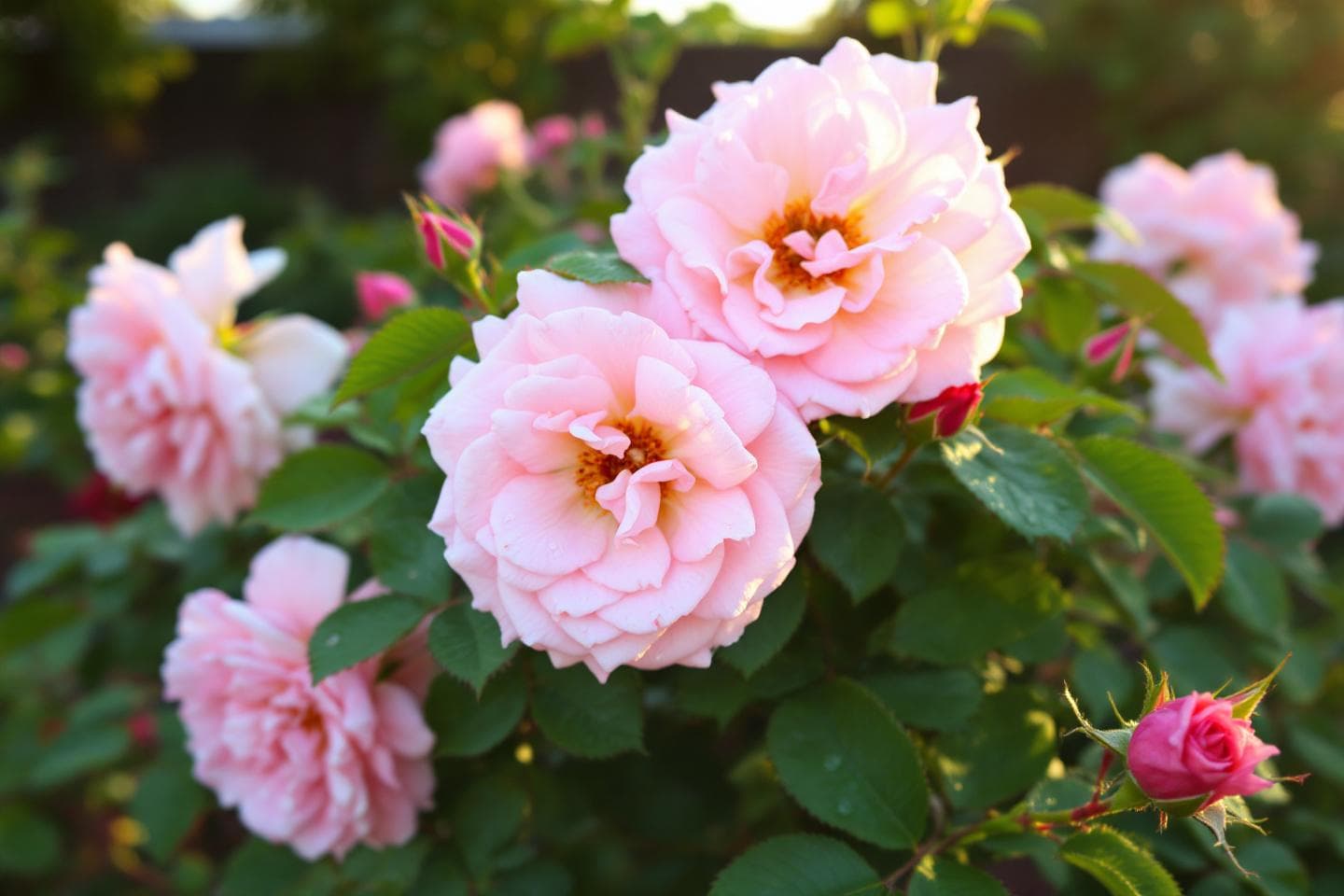
Roses are the most beloved flowers in the world, symbolizing love, beauty, and elegance. While they require some care, the rewards of fragrant, stunning blooms make every effort worthwhile.
Choosing the Right Rose Type
Best for Beginners
- - Knock Out Roses
- - Shrub Roses
- - Drift Roses
- - Carpet Roses
- - Disease-resistant varieties
Classic Favorites
- - Hybrid Teas (long stems)
- - Floribundas (clusters)
- - Grandifloras (tall)
- - English Roses (fragrant)
- - Require more care
Special Types
- - Climbing Roses
- - Miniature Roses
- - Tree Roses
- - Old Garden Roses
- - Specific training needed
Beginner's Choice
Start with Knock Out or shrub roses. They're disease-resistant, self-cleaning (no deadheading needed), and bloom continuously. Success builds confidence for fussier varieties later.
Site Selection & Preparation
Light Requirements
- - 6+ hours of direct sun daily
- - Morning sun is ideal (dries dew)
- - Afternoon shade okay in hot climates
- - Avoid deep shade completely
Soil Needs
- - Well-draining soil essential
- - pH 6.0-6.5 (slightly acidic)
- - Rich in organic matter
- - Amend clay with compost
Planting Your Roses
Step-by-Step Planting Guide
- 1Dig a wide hole - 18-24 inches wide, 12-18 inches deep
- 2Amend the soil - Mix in compost and aged manure
- 3Create a mound - Build soil cone in center for bare-root roses
- 4Position the graft union - At or slightly above soil level in mild climates
- 5Backfill and water - Water deeply to settle soil, eliminate air pockets
- 6Mulch - 2-3 inches around base, keeping away from stem
Best planting times: Early spring (after frost) or fall (6 weeks before first frost).
Essential Rose Care
Watering
- - Water deeply 1-2 times per week (not daily light watering)
- - Deliver 1-2 inches of water per week total
- - Water at the base, avoid wetting leaves
- - Morning watering preferred
- - Use drip irrigation or soaker hoses when possible
Fertilizing
Feeding Schedule
- - First feeding: When new growth appears
- - Continue every 4-6 weeks
- - Stop 6 weeks before first frost
- - Use balanced rose fertilizer
Organic Options
- - Compost (top-dress annually)
- - Fish emulsion
- - Alfalfa meal
- - Banana peels for potassium
Pruning Roses
Basic Pruning Rules
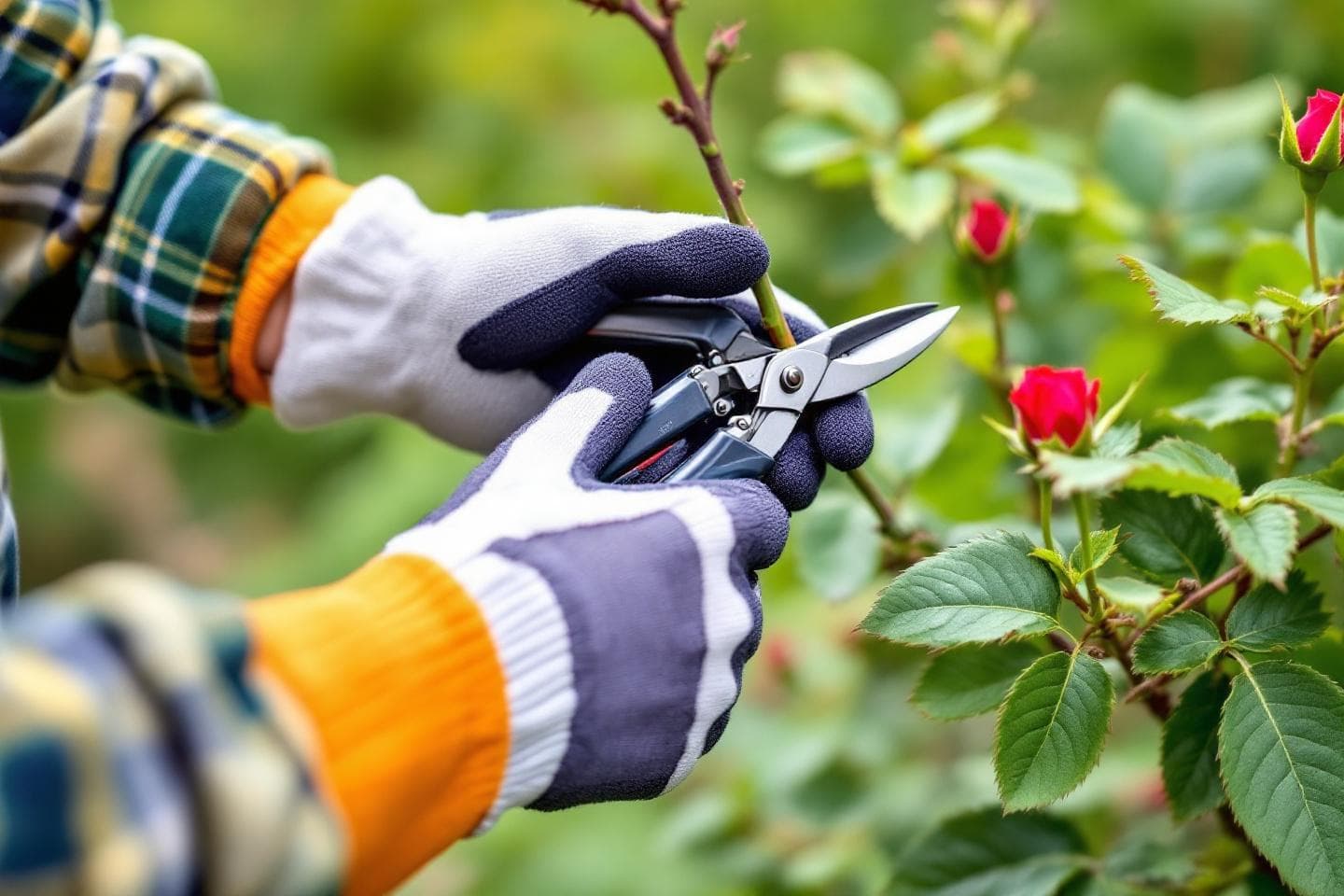
- 1. Timing: Prune in late winter/early spring when forsythia blooms
- 2. Remove dead wood: Cut back to healthy (green) tissue
- 3. Cut at 45-degree angle: 1/4 inch above outward-facing bud
- 4. Remove crossing branches: Open up the center for airflow
- 5. Shape: Aim for vase-shaped structure
- 6. Clean tools: Disinfect between plants
Exception: Once-blooming roses (old garden roses, ramblers) - prune after flowering.
Common Rose Problems
Black Spot
Signs: Black spots with yellow halos on leaves. Solution: Remove affected leaves, improve airflow, avoid overhead watering. Use fungicide if severe.
Powdery Mildew
Signs: White powdery coating on leaves. Solution: Improve air circulation, water at base. Treat with neem oil or baking soda spray.
Aphids
Signs: Clusters of small insects on new growth. Solution: Spray with strong water stream, introduce ladybugs, use insecticidal soap.
Japanese Beetles
Signs: Skeletonized leaves, damaged flowers. Solution: Hand-pick early morning, use milky spore for long-term control, avoid traps near roses.
Frequently Asked Questions
How long do roses take to bloom after planting?
Potted roses often bloom the first season. Bare-root roses may take 1-2 seasons to establish before prolific blooming. Don't expect peak performance until year 2-3.
Why are my roses not blooming?
Common causes: Too much shade (need 6+ hours sun), over-fertilizing with nitrogen (produces leaves not flowers), improper pruning, or young plant still establishing.
Can I grow roses in containers?
Yes! Choose compact varieties (miniatures, patio roses). Use large containers (15+ gallons), quality potting mix, and water more frequently. Move to protected spot in winter.
What are the most fragrant roses?
English roses (David Austin), Damask roses, and many hybrid teas are known for fragrance. Look for 'Mister Lincoln', 'Double Delight', 'Fragrant Cloud', and 'Gertrude Jekyll'.
Growing roses is one of gardening's greatest pleasures. Start with disease-resistant varieties, provide consistent care, and you'll be rewarded with seasons of beautiful, fragrant blooms. Remember: roses are tougher than their reputation suggests!
Source: American Rose Society - Expert rose cultivation guidance
Related Articles
Local Flower Team
Local Flower
The Local Flower team is dedicated to helping you discover beautiful blooms and connect with talented florists in your area.