
How to Grow Lavender: The Complete Growing and Care Guide
Lavender is one of the most beloved garden plants - fragrant, beautiful, and surprisingly easy to grow once you understand its simple needs.
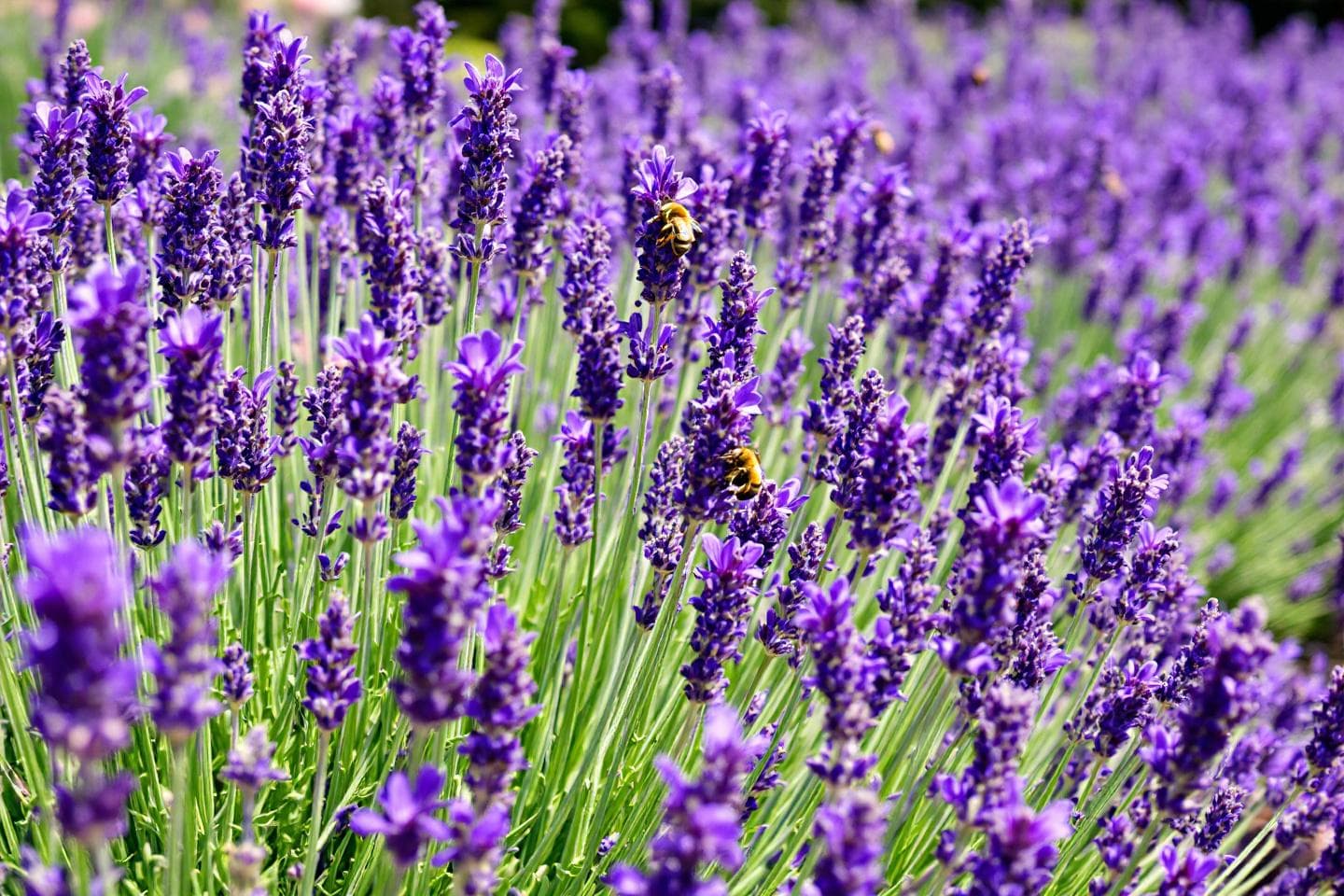
Lavender thrives on neglect - literally. This Mediterranean native evolved in poor, rocky soil with minimal water, and it performs best when we recreate those conditions. The key to growing gorgeous lavender is understanding that less is more.
Choosing the Right Lavender Variety
Not all lavenders are created equal. Choose based on your climate and intended use:
English Lavender (Lavandula angustifolia)
The most cold-hardy variety, surviving down to Zone 5. Compact plants with the sweetest fragrance - best for culinary use and sachets.
- Popular varieties: 'Hidcote', 'Munstead', 'Phenomenal'
- Height: 1-2 feet
- Hardiness: Zones 5-9
French Lavender (Lavandula dentata)
Distinctive serrated leaves and unique "rabbit ear" petals on flower spikes. Less cold-hardy but blooms longer in mild climates.
- Popular varieties: 'Goodwin Creek Grey'
- Height: 2-3 feet
- Hardiness: Zones 8-11
Spanish Lavender (Lavandula stoechas)
Striking pineapple-shaped flowers with showy top petals. More ornamental than fragrant, but very eye-catching.
- Popular varieties: 'Anouk', 'Otto Quast'
- Height: 2-3 feet
- Hardiness: Zones 7-10
Lavandin (Lavandula x intermedia)
Hybrid of English lavender, larger plants with longer stems. Higher oil content makes it ideal for sachets and crafts.
- Popular varieties: 'Grosso', 'Provence'
- Height: 2-4 feet
- Hardiness: Zones 5-9
Our Top Pick for Cold Climates
'Phenomenal' lavender (Lavandula x intermedia) is remarkably cold and heat tolerant, resisting both winter kill and summer humidity. If you've struggled with lavender before, try this variety.
Perfect Growing Conditions
Full Sun
Minimum 6-8 hours of direct sunlight daily. More sun = more flowers and fragrance.
Well-Drained Soil
The #1 cause of lavender death is wet feet. Sandy or gravelly soil is ideal.
Alkaline pH
Lavender prefers pH 6.5-7.5. Add lime to acidic soils.
Planting Lavender Step by Step
Planting Instructions
- 1Choose your spot - South-facing location with excellent drainage. Avoid low spots where water collects.
- 2Amend the soil - Mix in sand, gravel, or perlite to improve drainage. Add lime if soil is acidic.
- 3Dig the hole - Make it twice as wide as the root ball but no deeper. Lavender likes to sit high.
- 4Plant at the same level - Or slightly higher than it was in the pot. Never bury the crown.
- 5Mulch with gravel - Use light-colored gravel or pea stone, not wood mulch (retains moisture). Leave space around the stem.
- 6Water deeply once - Then hold back. Lavender establishes best when allowed to search for water.
When to Plant Lavender
Spring is ideal in cold climates (after last frost). Fall works well in mild climates (Zones 7+), giving roots time to establish before summer heat.
Lavender Care Guide
Watering
- - First year: Water when top 2 inches of soil are dry (about weekly)
- - Established plants: Water deeply every 2-3 weeks, less in humid climates
- - Signs of overwatering: Yellowing leaves, droopy stems, root rot
- - Key rule: When in doubt, don't water
Fertilizing
- - Lavender needs little to no fertilizer
- - Rich soil = weak, leggy growth and less fragrance
- - If needed, apply light compost in early spring
- - Never use high-nitrogen fertilizers
Pruning Lavender (Essential!)
Regular pruning is the secret to long-lived, bushy lavender plants. Without it, plants become woody and sparse.
Pruning Schedule
Spring Pruning (Essential)
Cut back by 1/3 to 1/2 in early spring when you see new growth at the base. Shape into a mound. Never cut into old, bare wood - it won't regrow.
After Flowering (Optional but Helpful)
Light trim after first bloom to encourage a second flush in some varieties. Remove spent flower stems.
Fall Pruning (Avoid in Cold Climates)
In Zones 8+, light shaping is okay. In colder zones, leave growth for winter protection.
Harvesting Lavender
When to Harvest
For maximum fragrance and oil content, harvest when about half the buds on each stem have opened - usually mid-morning after dew has dried.
How to Harvest
Cut stems just above the leaves, taking about 2/3 of the current year's growth. Use clean, sharp pruners or scissors.
Drying Lavender
Bundle 20-30 stems with a rubber band. Hang upside down in a dark, dry, well-ventilated area for 2-4 weeks.
Common Problems and Solutions
Woody, Bare Center
Cause: Lack of regular pruning. Solution: Unfortunately, lavender won't regrow from old wood. Replace the plant and prune annually going forward.
Yellowing Leaves
Cause: Usually overwatering or poor drainage. Solution: Water less frequently. Consider moving to a raised bed or container with better drainage.
Winter Die-Back
Cause: Cold damage or wet winter soil. Solution: Improve drainage, add gravel mulch, choose hardier varieties like 'Phenomenal' or 'Hidcote'.
Few or No Flowers
Cause: Not enough sun, too much nitrogen, or needs time to establish. Solution: Ensure full sun, stop fertilizing, wait a year for new plants.
Frequently Asked Questions
Can I grow lavender in a container?
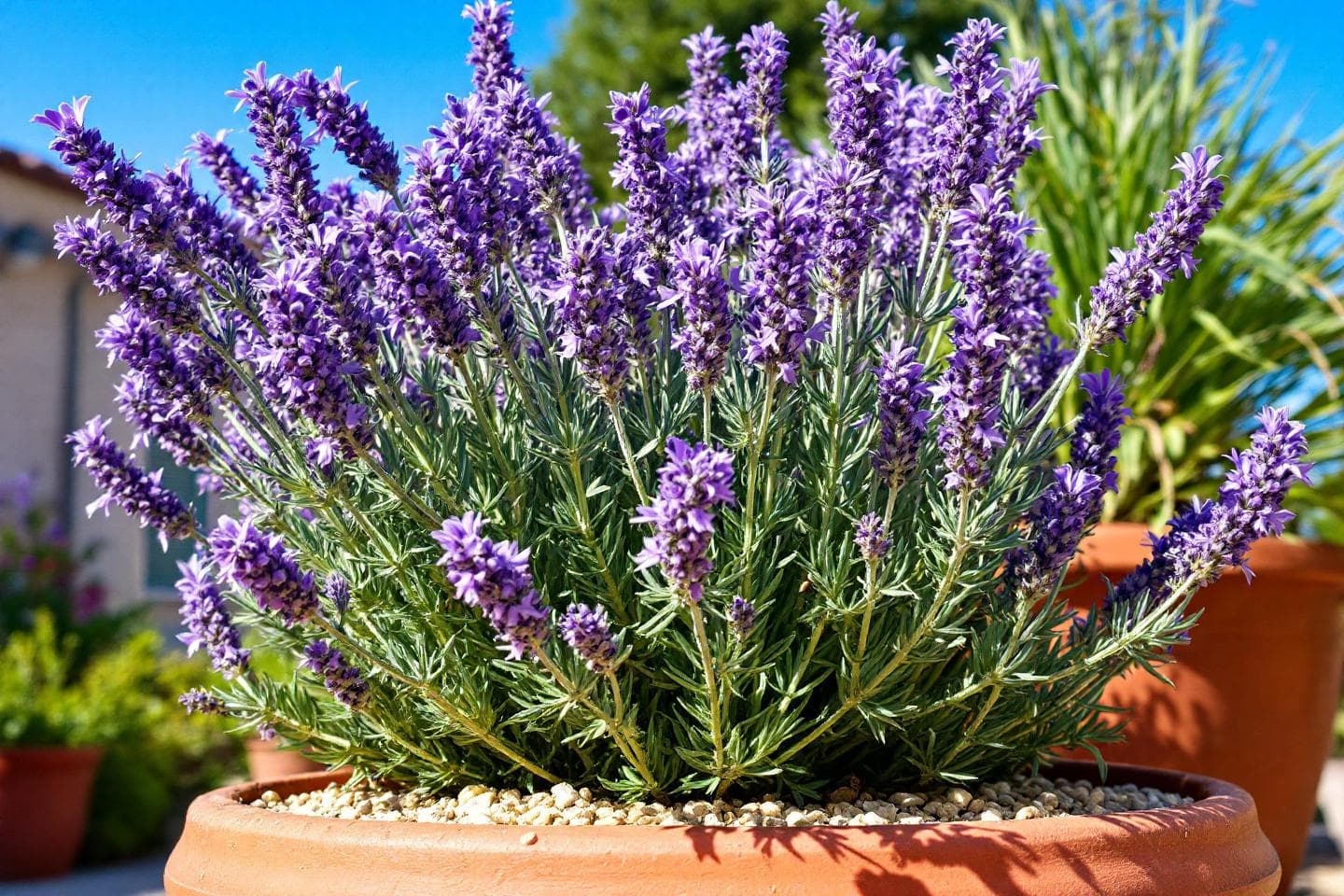
Yes! Use a pot at least 12-16 inches wide with excellent drainage holes. Terra cotta is ideal as it wicks away moisture. Use a fast-draining potting mix with added perlite. Water when the top inch is dry.
How long do lavender plants live?
With proper care and regular pruning, lavender plants can live 10-15 years. Without pruning, they typically decline after 4-5 years as they become too woody.
Why does my lavender keep dying?
The most common culprits are: overwatering (by far the biggest killer), poor drainage, too much shade, or winter wet. Improve drainage, reduce watering, and ensure full sun.
Growing lavender successfully comes down to remembering its Mediterranean origins: full sun, excellent drainage, and benign neglect. Give it these simple conditions, prune annually, and you'll be rewarded with years of fragrant purple blooms.
Source: Oregon State University Extension - Lavender cultivation research
Local Flower Team
Local Flower
The Local Flower team is dedicated to helping you grow beautiful gardens and connect with talented florists in your area.