
How to Care for Orchids: The Complete Indoor Guide
Orchids have a reputation for being difficult, but with the right approach, anyone can grow these stunning plants. Learn the secrets to keeping orchids thriving and reblooming year after year.
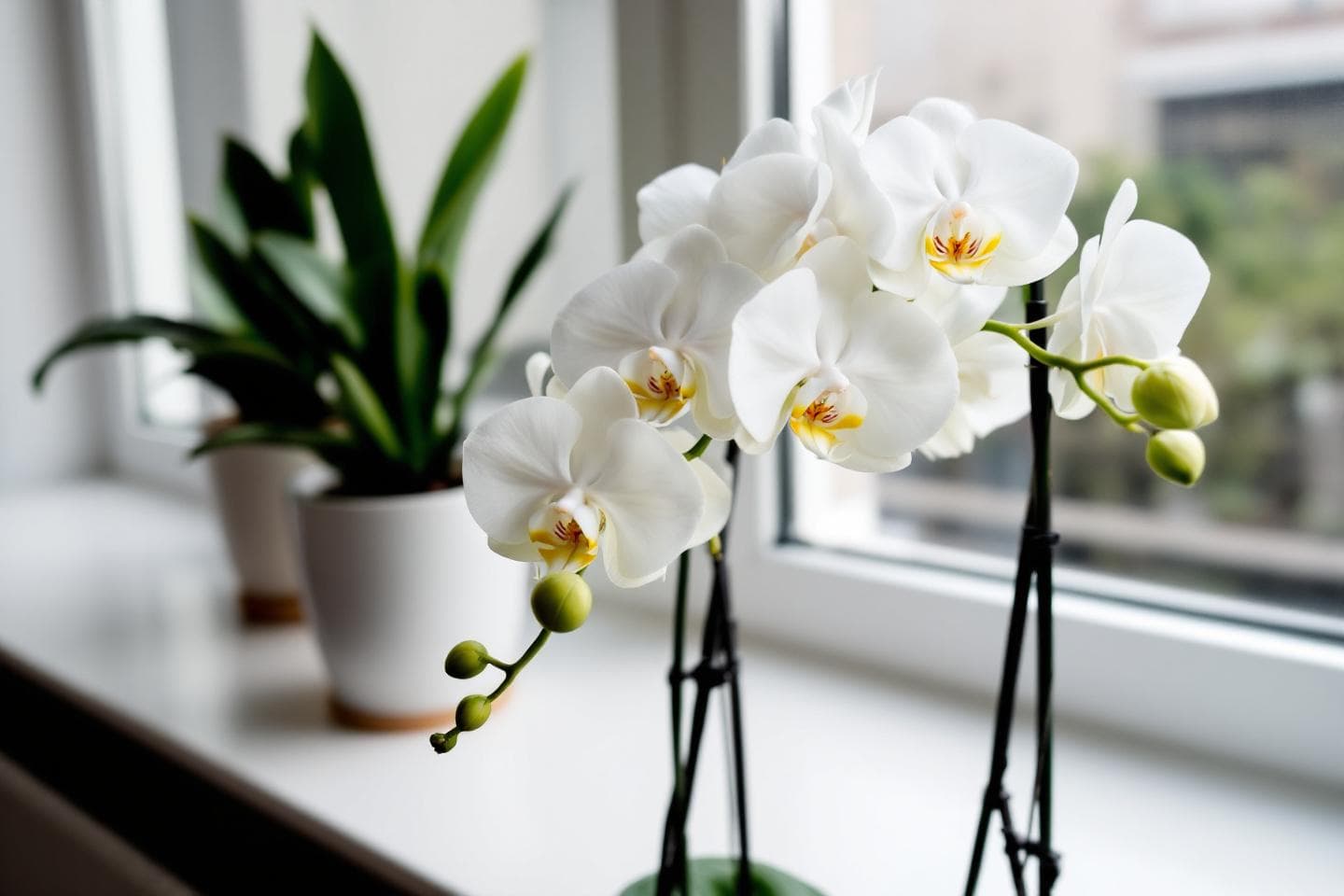
Orchids are the largest family of flowering plants, with over 25,000 species. The good news? The most common houseplant orchids are surprisingly easy to care for once you understand their basic needs.
Common Orchid Types for Beginners
Phalaenopsis (Moth Orchid)
- - Best for beginners
- - Long-lasting blooms (2-3 months)
- - Tolerates low light
- - Widely available
- - Blooms once or twice yearly
Dendrobium
- - Many varieties available
- - Needs bright light
- - Tolerates temperature variation
- - More dramatic blooms
- - Some need cool period
Oncidium (Dancing Lady)
- - Fragrant varieties
- - Cascading blooms
- - Bright indirect light
- - Easy to rebloom
- - Good for intermediate growers
Start with Phalaenopsis
If you're new to orchids, start with a Phalaenopsis (moth orchid). They're the most forgiving and widely available at grocery stores, garden centers, and florists.
Light Requirements
Ideal Light Conditions
- - Bright, indirect light
- - East or west-facing windows ideal
- - North window okay for Phalaenopsis
- - Filter harsh south sun with sheer curtain
Signs of Light Problems
- - Too much: Yellow, bleached, or sunburned leaves
- - Too little: Dark green leaves, no blooms
- - Just right: Light to medium green leaves
Watering Your Orchid
Overwatering is the #1 killer of orchids. These plants need much less water than most houseplants.
The Proper Watering Method
- 1Check weekly - Stick your finger an inch into the potting mix
- 2Water when dry - Only water when mix feels completely dry
- 3Water thoroughly - Let water run through drainage holes
- 4Drain completely - Never let orchid sit in standing water
- 5Use room-temperature water - Avoid cold water shock
Most orchids need watering every 7-10 days. Less in winter, more in summer.
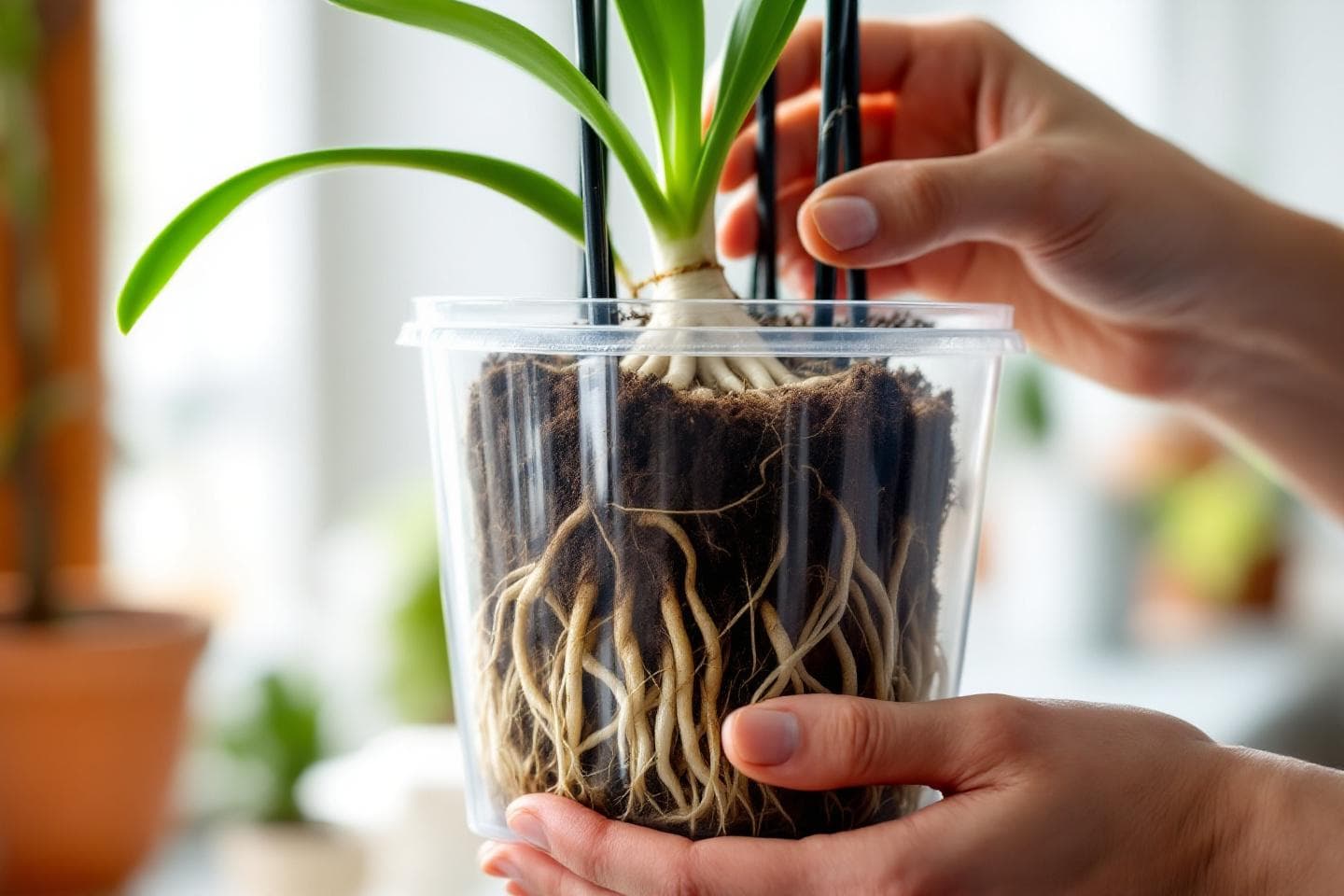
Healthy Roots
- - Silvery-green when dry
- - Bright green when wet
- - Firm and plump
- - Growing actively
Unhealthy Roots
- - Brown or black (rot)
- - Mushy or hollow
- - Papery and shriveled
- - Foul smell
Temperature & Humidity
Ideal Conditions
Temperature
- - Day: 65-80°F (18-27°C)
- - Night: 55-65°F (13-18°C)
- - 10-15° night drop encourages blooming
- - Avoid cold drafts and heating vents
Humidity
- - Ideal: 40-70% humidity
- - Use humidity tray with pebbles
- - Group plants together
- - Room humidifier helps in winter
Fertilizing
The "Weekly, Weakly" Method
- - Use balanced orchid fertilizer (20-20-20 or orchid-specific)
- - Dilute to 1/4 strength
- - Apply weekly during active growth (spring/summer)
- - Reduce to monthly in fall/winter
- - Water plain every fourth watering to flush salts
Repotting Your Orchid
When & How to Repot
Repot every 1-2 years, or when:
- - Potting mix has broken down (mushy, smells bad)
- - Roots are overflowing the pot
- - Plant is unstable in pot
- 1. Time it right: After flowering, when new growth appears
- 2. Remove old mix: Gently shake off decomposed bark
- 3. Trim dead roots: Cut away brown, mushy roots with sterile scissors
- 4. Use fresh orchid mix: Bark-based mix with good drainage
- 5. Choose right pot size: Only 1 inch larger, clear pots help
- 6. Wait to water: Let cuts heal 1-2 days before watering
Getting Your Orchid to Rebloom
Reblooming Tips for Phalaenopsis
- 1After blooms drop: Cut spike above the second node, or at base for weak plants
- 2Continue regular care: Keep watering, fertilizing, providing light
- 3Drop nighttime temps: 55-60°F for 2-4 weeks triggers new spike
- 4Watch for new spike: Usually emerges between leaves
- 5Be patient: Can take 3-6 months for new blooms
Common Problems & Solutions
Yellow Leaves
Causes: Overwatering, too much light, natural aging of lower leaves. Solution: Check roots for rot, adjust watering, move from direct sun.
Wrinkled, Limp Leaves
Causes: Underwatering or root rot (paradoxically). Solution: Check roots. If healthy and dry, water. If rotted, repot with fresh mix.
Bud Blast (Buds Fall Off)
Causes: Temperature shock, drafts, moving plant while budding, ethylene from fruit. Solution: Keep conditions stable once buds form.
No Blooms
Causes: Insufficient light, no temperature drop, overfertilizing with nitrogen. Solution: Move to brighter spot, expose to cooler nights.
Frequently Asked Questions
How long do orchid blooms last?
Phalaenopsis blooms typically last 2-3 months. Some orchids bloom for just a few weeks, while others can hold flowers for 4+ months. Cool temperatures help blooms last longer.
Should I use ice cubes to water orchids?
While popular, ice cubes can shock tropical orchids. Room-temperature water is better. If you use ice, place cubes on the bark, not touching leaves or roots, and let melt slowly.
Are aerial roots normal?
Yes! Healthy orchids often grow roots above the potting mix. This is natural - orchids are epiphytes that grow on trees in nature. Don't bury aerial roots when repotting.
Can I grow orchids in regular potting soil?
No. Regular soil retains too much moisture and will kill orchids. Use orchid bark mix, sphagnum moss, or a combination designed for orchids with excellent drainage.
Once you understand their needs, orchids are surprisingly easy and rewarding houseplants. Start with a Phalaenopsis, master the watering schedule, and you'll be enjoying beautiful blooms for years to come.
Source: American Orchid Society - Expert orchid cultivation resources
Local Flower Team
Local Flower
The Local Flower team is dedicated to helping you discover beautiful blooms and connect with talented florists in your area.