
Sympathy Flower Etiquette: What to Send & When
Sending flowers during times of loss can feel overwhelming. This guide helps you choose appropriate sympathy flowers and navigate the etiquette with care and confidence.
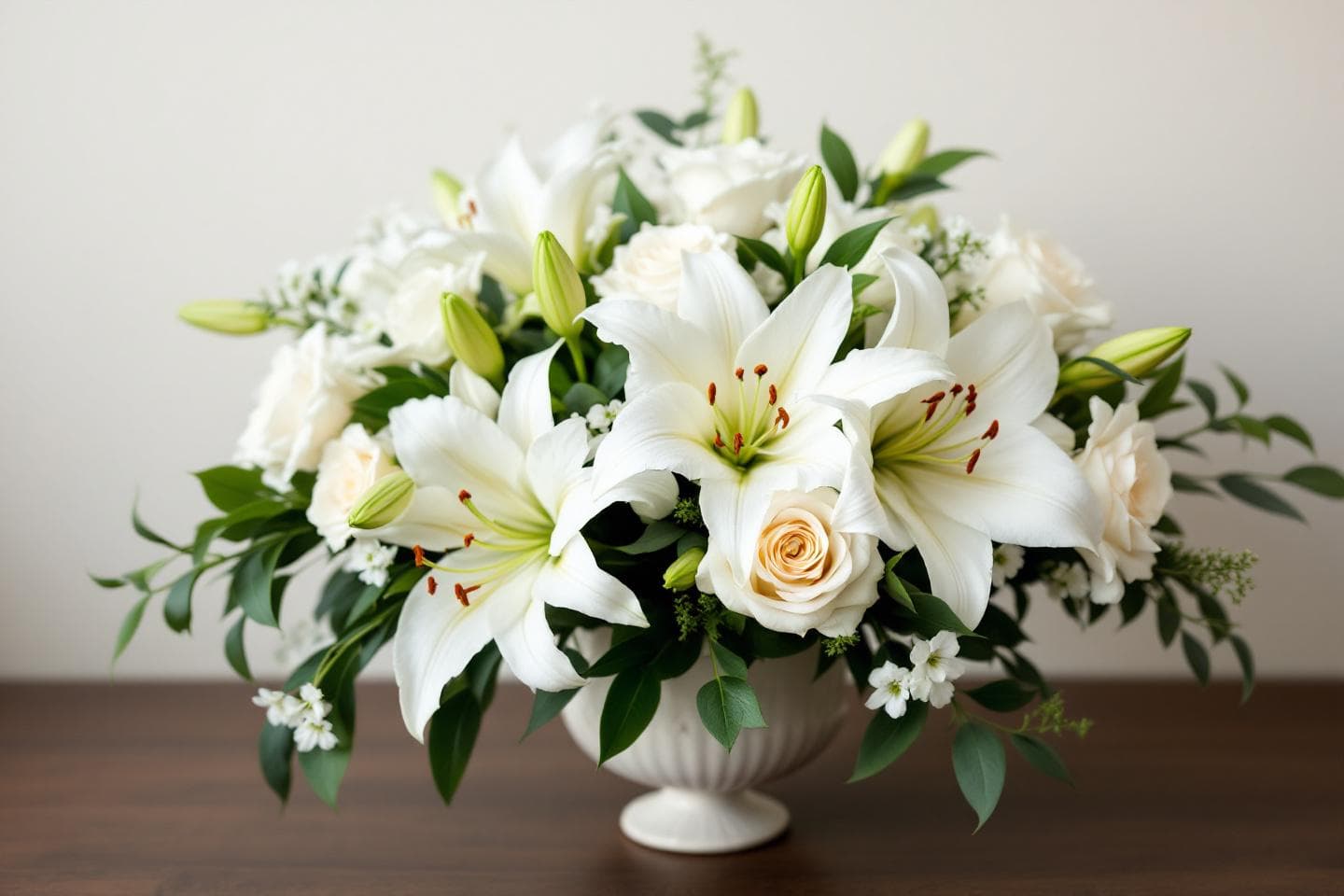
Flowers have been used to express sympathy for centuries because words often feel inadequate during times of grief. Understanding sympathy flower etiquette ensures your gesture brings comfort rather than confusion.
Types of Sympathy Arrangements
For the Funeral/Memorial Service
- Standing sprays: Displayed on easels near the casket
- Casket sprays: Placed on top of the casket (family only)
- Wreaths: Circular arrangements symbolizing eternal life
- Baskets: Large floor arrangements
- Cross/religious symbols: For faith-based services
For the Family's Home
- Vase arrangements: Ready to display, no work required
- Potted plants: Living memorial that lasts
- Dish gardens: Collection of plants in one container
- Smaller bouquets: Less overwhelming for the home
- Memorial trees: Planted in memory (arrange delivery)
When in Doubt
A vase arrangement sent to the family's home after the service is always appropriate. It arrives when the initial rush of visitors has passed and reminds them they're still in your thoughts.
Traditional Sympathy Flowers
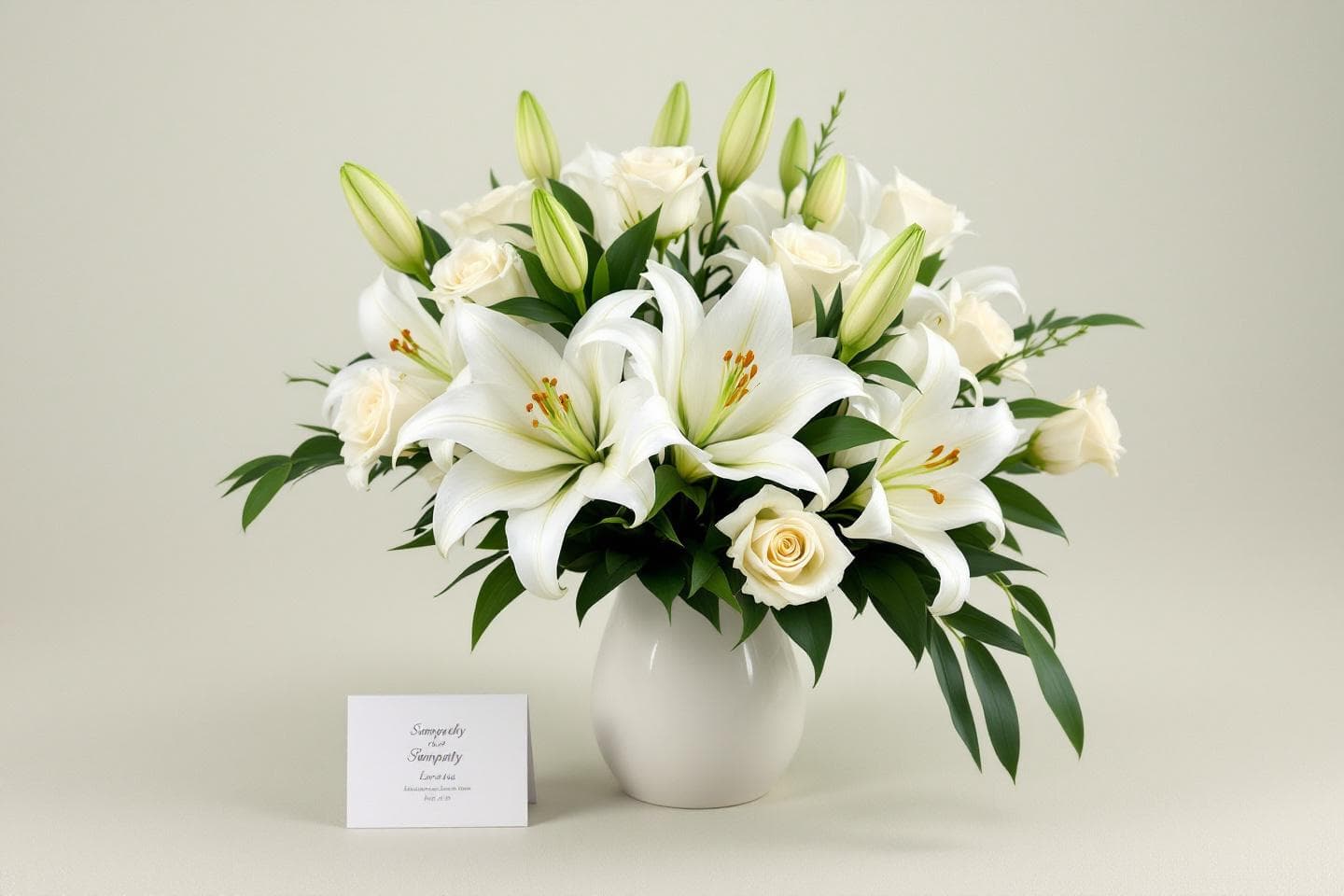
Lilies
Most associated with funerals. White lilies symbolize restored innocence and the soul's return to peace.
Roses
White roses signify reverence; red roses express love and respect; pink roses convey grace.
Chrysanthemums
Symbolize death and grief in many European and Asian cultures. Very appropriate for funerals.
Carnations
White carnations represent pure love and innocence. Often used in standing arrangements.
Gladioli
Represent strength of character, sincerity, and moral integrity. Common in spray arrangements.
Orchids
Symbol of eternal love. Elegant choice for sophisticated arrangements or as potted plants.
When to Send Flowers
Order to arrive at the funeral home or church before the service begins. Call ahead to confirm delivery times and whether flowers are welcome.
Send to the family's home after the funeral (a few days to a week later) or when you first learn of the loss if you can't attend.
Sending flowers weeks or even months later is perfectly appropriate. It shows you haven't forgotten and can be especially meaningful after the initial support fades.
Cultural & Religious Considerations
Christian Services
Flowers are welcome and traditional. White flowers are most common, but colors reflecting the deceased's personality are acceptable.
Jewish Traditions
Flowers are generally not sent to the funeral. Instead, make a donation to charity in the deceased's name, or send food to the mourning family during shiva.
Buddhist Traditions
White flowers (especially chrysanthemums and lilies) are appropriate. Avoid red flowers. Potted plants and flowering plants are often preferred.
Hindu Traditions
White flowers are traditional. Avoid arrangements with leather or animal products. Check if flowers are welcome at the specific ceremony.
Islamic Traditions
Flowers are generally acceptable but not obligatory. Simple, modest arrangements are appropriate. Donations to charity are also welcome.
When Uncertain
If you're unsure about cultural or religious preferences, call the funeral home. They can advise on what's appropriate and whether flowers are being accepted.
What to Write on the Card
Keep your message sincere and simple. You don't need to say much—your gesture speaks volumes.
Appropriate Messages
- "With deepest sympathy"
- "Thinking of you during this difficult time"
- "With love and heartfelt condolences"
- "In loving memory of [name]"
- "[Name] will be deeply missed"
Phrases to Avoid
- "They're in a better place"
- "I know how you feel"
- "At least they lived a long life"
- "Everything happens for a reason"
- Religious statements (unless sure of beliefs)
Frequently Asked Questions
How much should I spend on sympathy flowers?
$50-150 is typical for a thoughtful arrangement. Larger standing sprays or specialty arrangements may cost more. The gesture matters more than the price tag.
Can I send flowers if I didn't know the deceased?
Yes, if you know and care about the grieving family member. Your flowers express sympathy for their loss, not necessarily your relationship with the deceased.
What if the obituary says "in lieu of flowers"?
Honor the family's wishes. Make a donation to the specified charity. You can still send a heartfelt card or offer practical support.
Should I sign the card with my full name?
Yes, include your full name and relationship (if not obvious). Grieving families receive many flowers and may not recognize first names only.
Remember, the most important thing is that you're reaching out. Whether you send flowers, a plant, a card, or make a donation, your thoughtfulness during a difficult time will be remembered and appreciated.
Local Flower Team
Local Flower
The Local Flower team is dedicated to helping you discover beautiful blooms and connect with talented florists in your area.