
How to Dry Flowers: Complete Guide to Preserving Blooms
Drying flowers lets you keep their beauty forever. Master air drying, silica gel, and hanging methods to create stunning dried arrangements and lasting keepsakes.
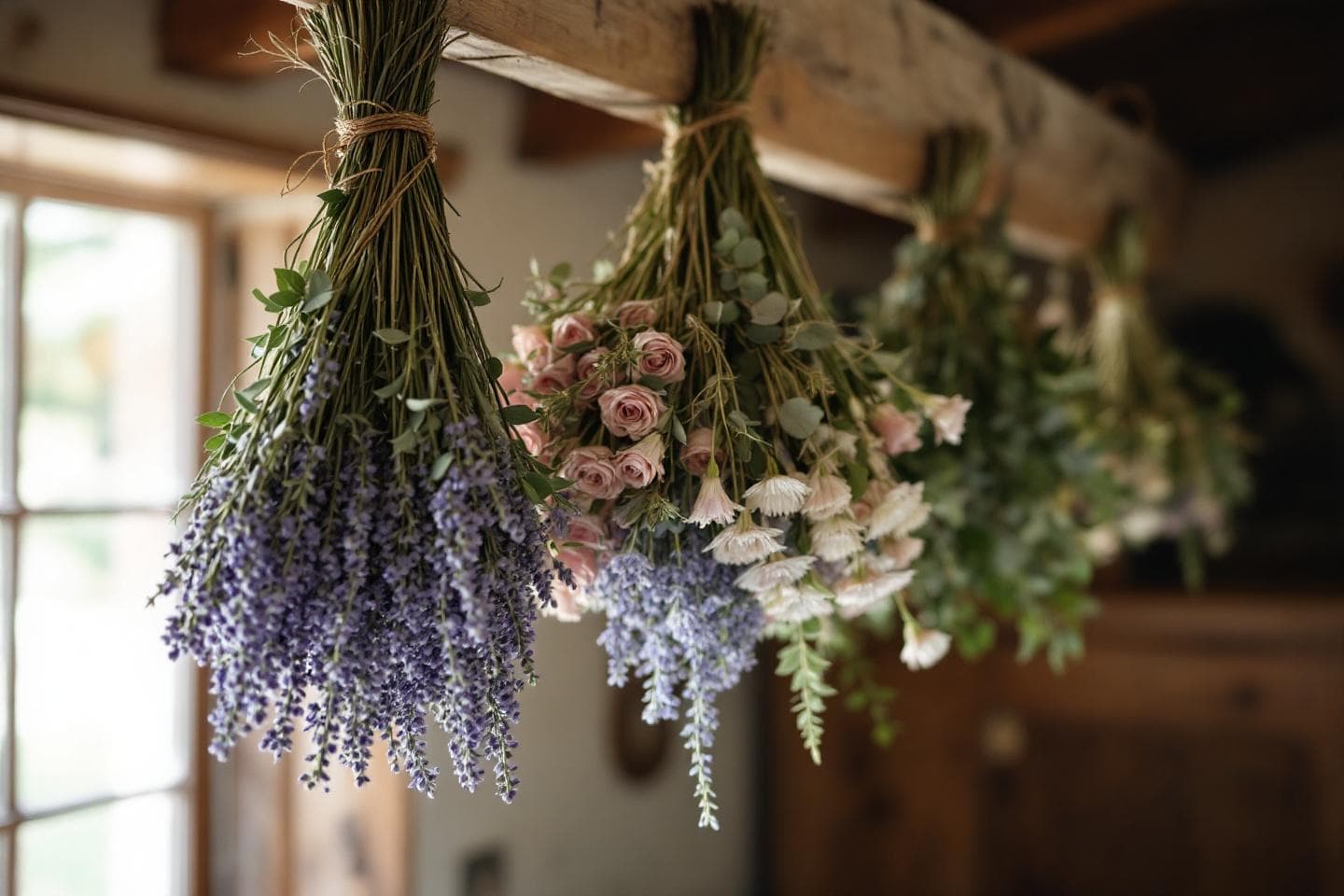
Whether you want to preserve a wedding bouquet, create everlasting arrangements, or craft with dried blooms, knowing how to dry flowers opens up a world of creative possibilities that can last for years.
Best Flowers for Drying
Excellent for Drying
- - Lavender
- - Hydrangeas
- - Statice
- - Globe Amaranth
- - Strawflowers
Dry with Care
- - Roses
- - Peonies
- - Ranunculus
- - Dahlias
- - Zinnias
Challenging to Dry
- - Tulips
- - Irises
- - Lily of the Valley
- - Gardenias
- - Impatiens
Pro Tip: Timing is Everything
Harvest flowers for drying just before they fully open. Pick them in the morning after dew has evaporated but before the heat of midday.
Method 1: Air Drying (Hanging Method)
The most popular and easiest method for drying flowers. Works especially well for sturdy blooms with long stems.
Step-by-Step Air Drying
- 1Remove excess foliage - Strip leaves from the lower two-thirds of stems
- 2Bundle stems together - Group 3-6 stems with rubber bands (they shrink as they dry)
- 3Hang upside down - Use hooks, hangers, or a drying rack
- 4Choose the right location - Dark, dry, warm place with good airflow
- 5Wait 2-3 weeks - Flowers are ready when stems snap cleanly
Avoid humid areas like bathrooms or kitchens. Attics, closets, and spare rooms work well.
Method 2: Silica Gel Drying
The best method for preserving color and shape. Perfect for delicate blooms like roses and peonies.
Silica Gel Method
- 1. Pour a 1-inch layer of silica gel in an airtight container
- 2. Trim stems short (1-2 inches) or remove completely
- 3. Place flowers face-up on the silica gel layer
- 4. Gently cover with more silica gel, filling between petals
- 5. Seal container and store in a cool, dry place
- 6. Check after 3-7 days depending on flower thickness
- 7. Brush away silica gently with a soft brush
Tip: Silica gel is reusable - dry it in the oven at 250°F to recharge.
Method 3: Microwave Drying
Quick Microwave Method (with Silica)
- 1. Use a microwave-safe container (not metal)
- 2. Layer silica gel and flowers as described above
- 3. Leave container uncovered in microwave
- 4. Heat on medium-low for 2-3 minutes
- 5. Let stand for 20-30 minutes in microwave
- 6. Remove and let cool completely before uncovering
Timing varies by flower. Start with less time and add 30-second intervals as needed.
Color Preservation Tips
Before Drying
- - Choose flowers at peak color
- - Avoid faded or browning blooms
- - Dry immediately after harvesting
- - Handle gently to prevent bruising
After Drying
- - Store away from direct sunlight
- - Keep in low-humidity environment
- - Consider UV-protective sealant spray
- - Display in shadow boxes when possible
Creative Uses for Dried Flowers
Dried Arrangements
Create stunning long-lasting centerpieces and vase arrangements that never need water.
Potpourri
Mix dried petals with essential oils for fragrant sachets and decorative bowls.
Wreaths & Swags
Craft seasonal door decorations that can last through multiple seasons.
Candle Making
Press dried petals into pillar candles for beautiful botanical embellishments.
Frequently Asked Questions
How long do dried flowers last?
Properly dried and stored flowers can last 1-3 years or longer. Keep them away from humidity, direct sunlight, and dust to maximize their lifespan.
Why are my dried flowers turning brown?
Browning usually results from too much humidity during drying, harvesting flowers too late, or exposure to sunlight. Ensure proper air circulation and dry in a dark location.
Can you dry flowers from a bouquet?
Yes! The sooner you dry them, the better. Don't wait until flowers are wilting. Bouquets from florists often dry well since they use quality, fresh flowers.
Which drying method preserves color best?
Silica gel preserves the most vibrant colors, followed by microwave methods. Air drying tends to result in more muted, vintage-looking tones.
Drying flowers is a rewarding way to preserve memories and create lasting decor. Start with easy-to-dry varieties like lavender or hydrangeas, then experiment with different techniques to find your favorite method.
Source: University of Missouri Extension - Research-based flower preservation techniques
Local Flower Team
Local Flower
The Local Flower team is dedicated to helping you discover beautiful blooms and connect with talented florists in your area.